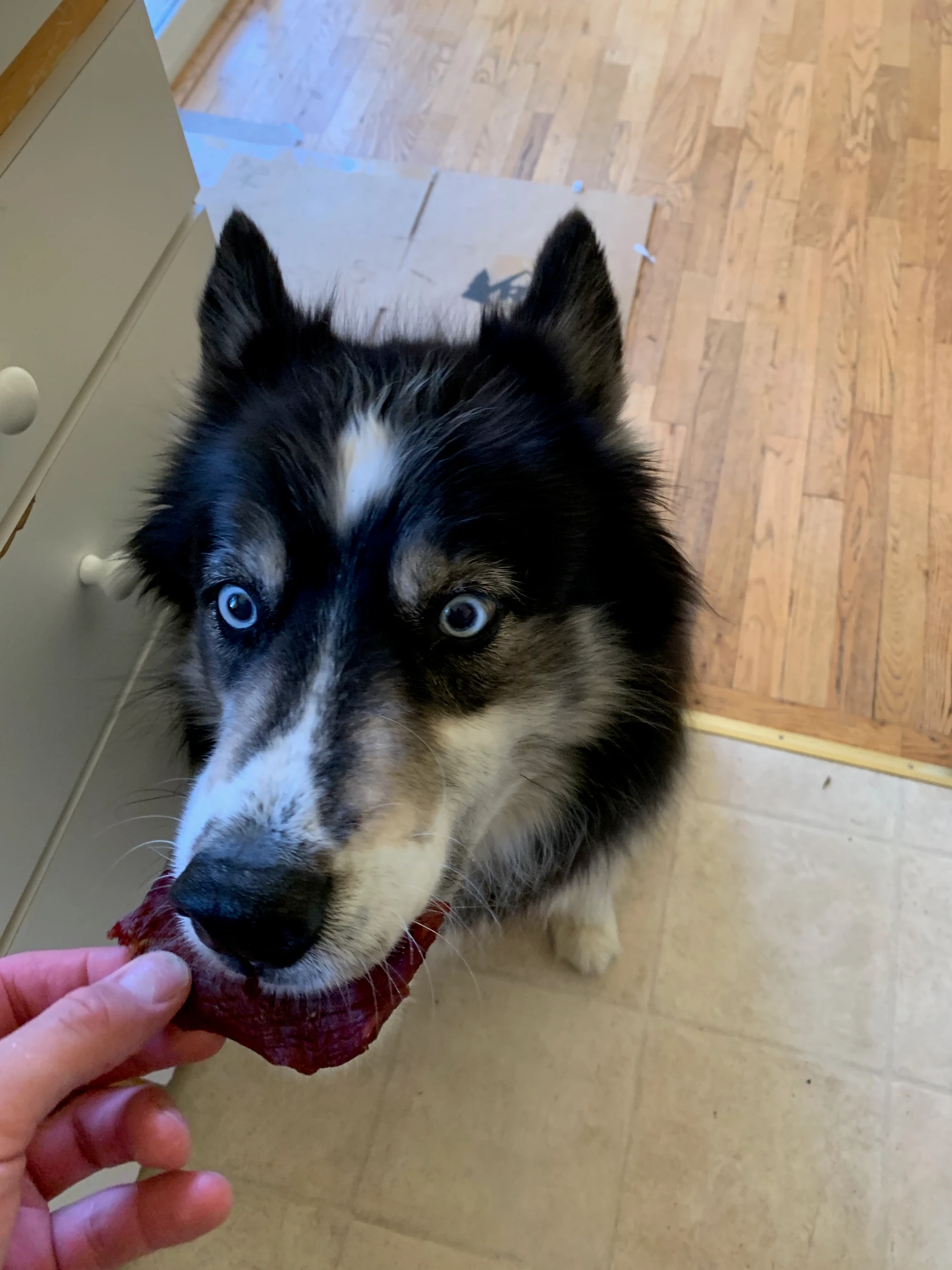
When Your Husky Is Sick: The Cheat Sheet
Won't eat, won't come in, limping, pads, ticks, bloat, and when to actually call the vet. A quick reference from twelve years with Stud.
I am not a vet. This is what I learned over twelve years of living with Studly, what I watched for, and when I worried. Trust your gut. You know your dog.
Call the vet now
- Has not eaten anything for more than 48 hours.
- Eating but losing weight.
- Refusal to eat came on suddenly and they seem off in other ways: lethargic, not drinking water, vomiting, diarrhea.
- Bloat: a swollen, tight belly, retching without bringing anything up, pacing, drooling, can’t get comfortable. Deep-chested dogs can die from this in hours. Do not wait.
- Bumping into things, cloudy eyes, or reluctance to be in low light. Huskies are predisposed to cataracts, progressive retinal atrophy, and corneal dystrophy.
Won’t eat
- Skipping a meal is normal for a husky. Healthy, active, just doesn’t feel like eating today: put the bowl down, walk away, try again tomorrow.
- Exercise before meals. A tired husky is a hungry husky.
- Interested in food but backs away from the bowl or drops food while chewing: get their teeth checked. They cannot tell you their mouth hurts.
- When Stud did not eat a home-cooked meal, I knew something was wrong. Know what your dog never refuses.
- Check the food itself. Cheap kibble is full of fillers huskies do not digest well, and they seem to know it.
Full post: My Husky Won’t Eat.
Overheating
- Huskies are built for cold, not heat. Slowing down on a summer run is the first sign. Stop. Shade, water, airflow.
- No running when it’s hot. No hot pavement. Never in a car.
- Do not shave them to cool them down. It does the opposite.
Limping, stiffness, slowing down
- Slowing down on stairs, hesitating before jumping, favoring a rear leg: worth an x-ray. Hip dysplasia shows up gradually.
- Keep them off concrete while running or walking. Stud limped once in a while.
- Weight gain, lethargy, a coat that is not quite right, general slowness: could be hypothyroidism. It is easy to manage once diagnosed, but it takes bloodwork to catch.
Skin, pads, coat
- Crusty, scaly skin around the muzzle and eyes: zinc deficiency. Specific to huskies. Responds well to zinc supplementation once a vet identifies it.
- Pads getting a beating in a damp climate, or a yeast infection: dog boots, then a bath with baking soda or Epsom salt. He didn’t like it, but I think it helped.
- Matting: a de-matting brush with razors on one side. Brush regularly.
- Dry coat after a bath: the shampoo. No strong smells, no human shampoo.
Fleas and ticks
- Fleas: get them wet, Dawn dish soap around the neck and head first (avoid eyes), then the rest of the body. Let them run around 5-10 minutes, then bathe. Diatomaceous earth after.
- Ticks: check them after every walk, especially in Michigan and the East. Cedar chips where they lay and DE in the yard. The natural remedies never fully worked for me on ticks; I used the topical meds maybe a dozen times in twelve years, and hated it.
- Out west there were not too many ticks and very low heartworm. That changes by region, so ask your vet what is actually around you.
More in General Health.
Won’t come inside / won’t listen
- No one is listening if they are bored or under-stimulated. That becomes the game, and you getting angry isn’t helping one bit.
- Don’t chase, don’t punish the recall.
- Long line for safety. New cue if “come” is poisoned. Big rewards, and sometimes release them back outside.
- Emergency reset: “find it,” and toss treats inside.
Full plan: My Husky Won’t Come Inside.
Things that helped Stud
- Pumpkin and pumpkin seeds, olive oil, coconut oil, bone broth, apple cider vinegar. What each one is for is in Holistic Health.
- Home-cooked meals, soft bones from the butcher, and sticks to chew. Twelve years old and his teeth looked great.
- RO or filtered water.
The thing I learned the hard way
Huskies do not show pain the way other dogs do. They are stoic. Stud could be dealing with something that would send another dog to the floor whimpering and he would be out there running like nothing was wrong. Is he hesitating somewhere he normally does not? Eating differently? Sleeping more? That is the whole game. Know their normal.