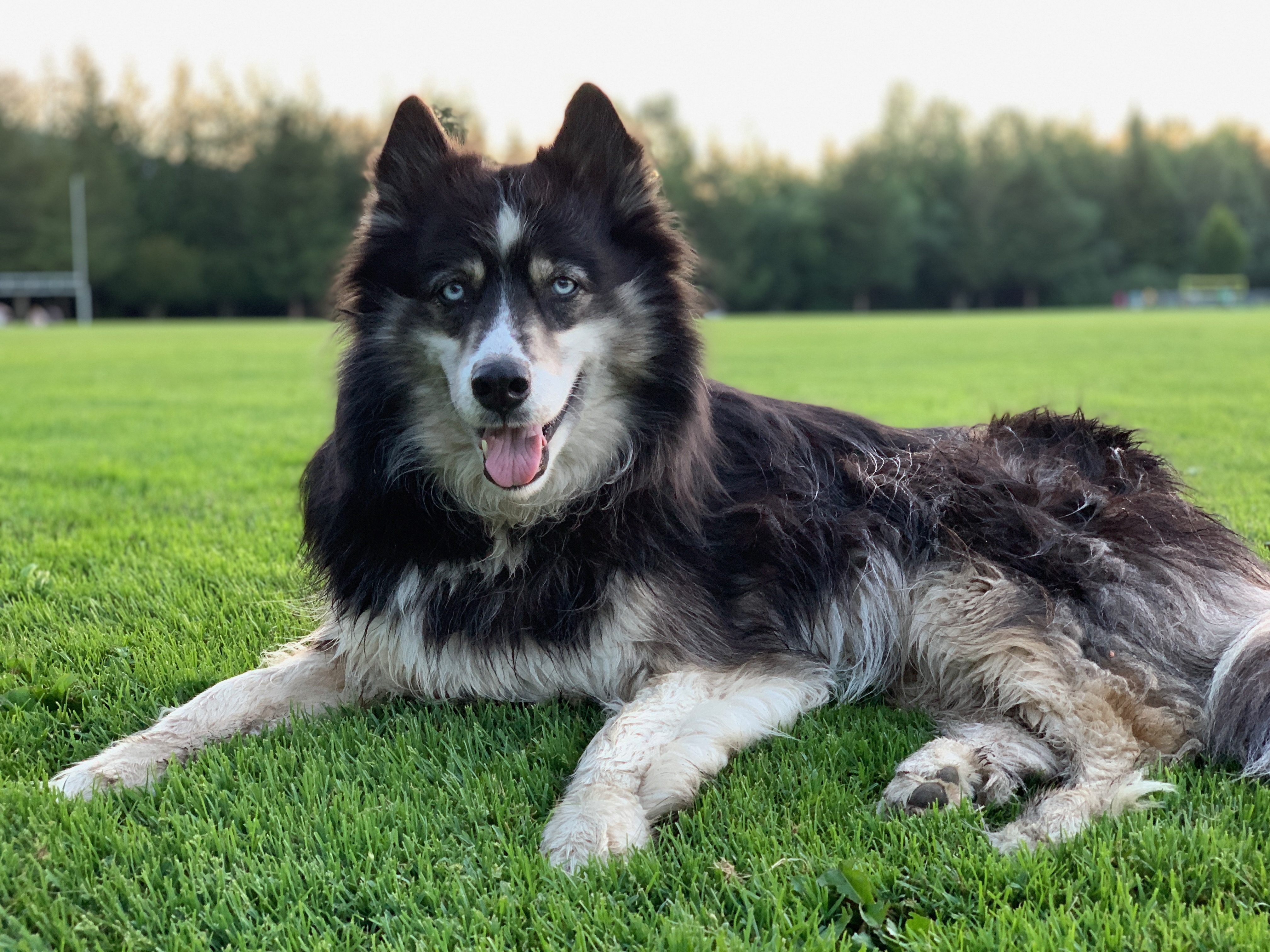
General Health: Keeping Your Husky Thriving
Huskies are a remarkable breed with specific health needs. From diet and exercise to vet visits and warning signs, here's what I learned raising Studly.
Stud was incredibly healthy for the vast majority of his life. He had energy that most dogs half his age could not match and a coat that looked like he had just left a groomer although he did not once go to a groomer. A lot of that came down to understanding what a Siberian Huskies actually need, which is genuinely different from what most dog owners expect.
This is not a veterinary guide. I am not a vet. This is just what I learned over years of living with Studly, what worked, what I wish I had known earlier, and what I noticed when something was off.
Cautions
Some things I did not read about or understand fully when I got Stud were overheating, cooling, and knowing their coat. We regularly went mountain biking and there was a time he was slowing down a lot more than usual. We started around 10am in the summer, but as it took us an hour to get done it was warming up. I did not realize it at the time, but he was overheating. Huskies are built for cold, not heat. I got lucky that at the end of the trail there was a lake where he could cool off. Looking back I just did not know and I was always a little too rough on him, partially because he was rough on me. Know the signs: excessive panting, drooling more than usual, a wobbly gait, confusion, wanting to stop suddenly on a trail when they normally would not. If any of that happens, get them into shade, onto cool ground, and give them water. Do not put ice cold water on a dog that is overheating. Cool water, cool ground, air movement, and get to a vet if they do not recover quickly
But yes, never leave them in the heat or expect them to keep up in the summer. That means no running when it’s hot out. If they start to slow down, they are telling you something and it could be dangerous. Do not leave them in a car. Don’t be stupid.
The second very important issue I didn’t realize until later was how much their coat affects their temperature regulation. We went winter camping in late October in the mountains where it was zero degrees at higher altitude at night. I had a blanket for him, but when petting him I was surprised he was shivering. I put him in my sleeping bag with me and he didn’t move much that night. Snug as a bug. This caught me off guard because he used to sleep outside when it was minus 10 in Michigan, of his own choosing since there was a dog door he could go in and out of. What I realized is it takes time for them to shed and it takes time for them to build their coat back up.
Exercise is not optional, it is medicine
If there is one thing that determines the overall health of a husky more than anything else, it is exercise. Not walks. Running. Huskies were built to jog/run 50ish miles a day in the Arctic. That drive does not disappear because they live in a suburb. If they are not doing something with that energy, it comes out in ways you will not enjoy.
Stud needed a real run every single day. Not a 20 minute walk around the block. A genuine off leash run, a long bike ride alongside him, a trail hike, something that actually challenged him physically. On days when that did not happen, he was restless. On days when it did, he was calm, ate well, slept deeply, and was generally a pleasure to be around.
Under exercised huskies develop health problems. Their joints stiffen, they gain weight, their anxiety spikes, their coat suffers, and their digestion gets weird. Most of the behavioral problems people associate with the breed, the destruction, the howling, the refusal to listen, trace back to not enough physical output. If your husky seems like a handful, look at the exercise first.
Food matters more than most people realize
I went through the research on this when Stud was young and came away with a very different approach than most dog owners I knew. Commercial kibble varies enormously in quality and a lot of it is not great. The cheap stuff is heavily processed, full of fillers, and huskies specifically seem to tolerate it poorly. Their digestion is built for lean proteins and they know the difference.
I ended up cooking for Stud. Chicken thighs, salmon, ground beef, steak, liver, stew meat. I would cook in bulk, portion it out, and store it just like I would meal prep for myself. It sounds like a lot of work but once you get into a rhythm it is not that different from buying kibble, just more intentional.
His coat was noticeably better on whole food. His energy was more consistent. And he ate every meal instead of grazing reluctantly at kibble that had been sitting in the bowl all day.
If you are going to feed kibble, at least do the research on what is in it. Not all kibble is the same and the difference between a quality food and a cheap one is real.
Coat and shedding
Stud was a little different, he was not a typical husky. When doing research he came from siberia, he had long fur. Besides the blue eyes as you can see, he looked more like a wolf. And I think he was partial wolf from a lot of his behaviors. What this meant is he really only shed once a year. When he did shed, it was a crazy amount. Trash bags full of fur each year.
A de-matting brush which has razors on one side is a lifesaver. It was very hard to keep him from matting. He hated me brushing him, probably was a little too aggressive, but there was just so much fur. He let his mom do it, but she wasn’t always there.
What you can do is brush regularly. A good undercoat rake or a slicker brush used consistently makes a significant difference, for the dog and for your house. Studly actually liked being brushed once we made it a regular thing. It kept his coat clean, reduced matting, and gave him some calm one on one time.
Never shave a husky. People think it helps with heat but it does the opposite. Their double coat insulates both ways, keeping them warm in cold weather and cool in hot weather. Shaving it disrupts that system and can damage the coat permanently. If you are concerned about your husky overheating, focus on shade, water, airflow, and limiting outdoor activity during the hottest parts of the day.
Bathing does not need to happen often. Huskies are naturally clean and their coat repels dirt pretty well. A few times a year is usually enough unless they find something to roll in, which Stud absolutely did on a regular basis. I could also tell the type of shampoo used made a difference. Please don’t use something that has a very strong smell. Cheap or human shampoo will leave their coat dry. Earthbath Oatmeal seemed good, although not sure if they changed the formula since I used it years ago.
Fleas
Mentioning shampoo above there is an exception. I think Stud got fleas once or twice. When he did get them dawn dish soap and Diatomaceous Earth is what I used. I am not putting chemicals on him. I was lucky i lived by a lake. He would get wet then I would put the dish soap around his neck/head first (avoid eyes), then continue down the rest of the body. Let him run around for 5-10 minutes then back in a different part of the lake he goes to wash the soap off. Before letting him go anywhere I would put DE everywhere, the car, the yard, the carpet, any bedding. Vacuumed the floor and then washed his bedding. I think I dusted him with a little DE as well the first day after he dried. Be careful don’t get it in their eye and do not think they are suppose to breath it so watch them. Fleas were gone in one go.
Ticks
Evil things, pure evil. Growing up in Michigan this was a serious issue and it only got worse every year. Out west they were not as bad. I think the midwest and east cost is horrible. I hated the topical flea and tick meds. I used maybe a half dozen to a dozen times. I hated it, but the natural remedies never fully worked for me. I always put cedar chips where he laid in the yard and DE. But most if not all the ticks came from the trails we would go on. Every night when petting him I would run my fingers very softly feeling for them. I think I found most of them this way. I tried essential oils diluted, by spraying it on him before we left. He didn’t like this one bit. I don’t have an answer, if you do let me know.
Vet visits and what to actually watch for
Stud was on a standard annual wellness visit schedule for most of his life and that worked fine. The things I would tell someone to watch for are the ones that can come on quietly.
Weight change is the big one. Huskies can be lean and that is fine for the breed, but if you notice your dog getting thinner without a change in diet, or gaining weight on the same activity level, pay attention. Either one can indicate something going on that is worth investigating.
Eyes are something huskies historically can have issues with. Cataracts, progressive retinal atrophy, and corneal dystrophy are all things the breed is predisposed to. If you notice cloudiness, discharge that is not normal, your dog bumping into things, or reluctance to be in low light, get their eyes checked. I have heard a tiny bit of castor oil helps, although Stud never had eye problems.
Hips are the other one. Hip dysplasia is not as common in huskies as it is in some larger breeds but it does happen, and it tends to show up gradually. If your husky starts slowing down on stairs, hesitates before jumping, or you notice them favoring a rear leg, it is worth an x-ray. Stud limped once and a while. Keep them off concrete while running or walking.
Hypothyroidism shows up in the breed more than people expect. Symptoms are subtle and easy to chalk up to aging: weight gain, lethargy, a coat that is not quite right, general slowness. It is easily managed with medication once diagnosed, but it requires bloodwork to catch it.
Zinc deficiency is specific to huskies and is worth knowing about. Their bodies do not absorb zinc the way other breeds do, and a deficiency shows up as crusty, scaly skin around the muzzle and eyes. It looks alarming but responds well to zinc supplementation once a vet identifies it.
The things I learned the hard way
Huskies do not show pain the way other dogs do. They are stoic. Studly could be dealing with something that would send another dog to the floor whimpering and he would be out there running like nothing was wrong. This means you have to pay closer attention to subtle behavioral changes. Is he hesitating somewhere he normally does not? Is he eating differently? Sleeping more? Is something about the way he moves just slightly off? Trust that instinct. You know your dog.
Dental care. I did not have to worry about this with his cooked meals, soft bones from the butcher and sticks he would chew on. 12 Years old and his teeth looked great.
The most important thing, and this sounds obvious, is to just know your dog. Their normal. Their patterns. What their eyes look like on a regular day, how they carry themselves, how interested they are in food, what their energy level is on a given day. That baseline is what lets you notice when something is wrong before it becomes a crisis.